Baoding Jikai Power Equipment Co., Ltd.

Surge Arrester Selection: MCOV, TOV and Protection Level
Surge arrester selection requires more than matching a catalog number to a nominal system voltage. The arrester must tolerate normal operating stress and temporary overvoltage while providing an appropriate protective level for the connected equipment. The practical starting point is the network’s operating and earthing information.
Separate the voltage terms
Maximum continuous operating voltage, commonly called MCOV, describes the continuous power-frequency voltage capability. Rated voltage is a different arrester characteristic. Temporary overvoltage, or TOV, concerns voltage stress over a specified duration. Hubbell’s arrester application guide explains why operating voltage and temporary stresses must be considered together when selecting an arrester.
Ask the system designer for the highest normal voltage at the arrester, the neutral earthing arrangement and the expected earth-fault clearing time. A nominal line voltage without those details leaves an important part of the selection problem unresolved.
Compare protection against equipment withstand
The arrester’s residual voltage must be reviewed against the insulation withstand of the equipment being protected. The comparison also needs the specified impulse conditions and the installed connection arrangement. A lower catalog residual-voltage number is not useful if the arrester cannot withstand the network’s operating stresses.
For a quotation, request the applicable voltage-current characteristics, TOV capability, discharge-current rating and relevant energy or charge-transfer capability. Keep the source and test basis alongside each value so figures from different product classifications are not treated as directly interchangeable.
Use Jikai’s model information carefully
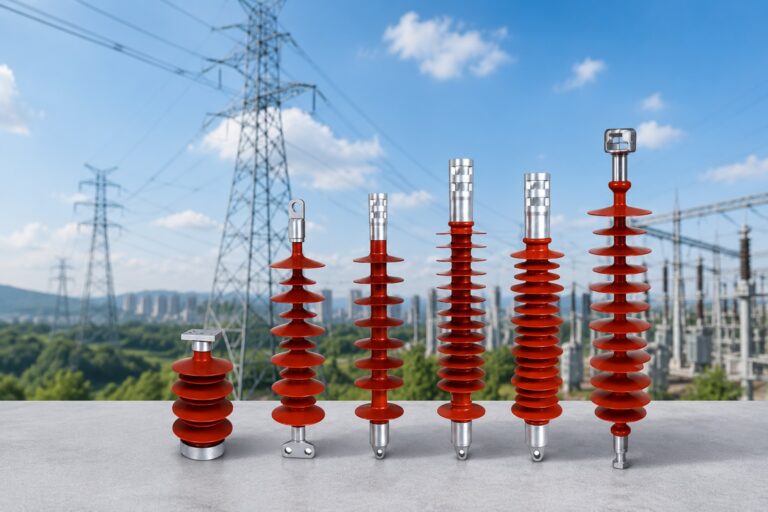
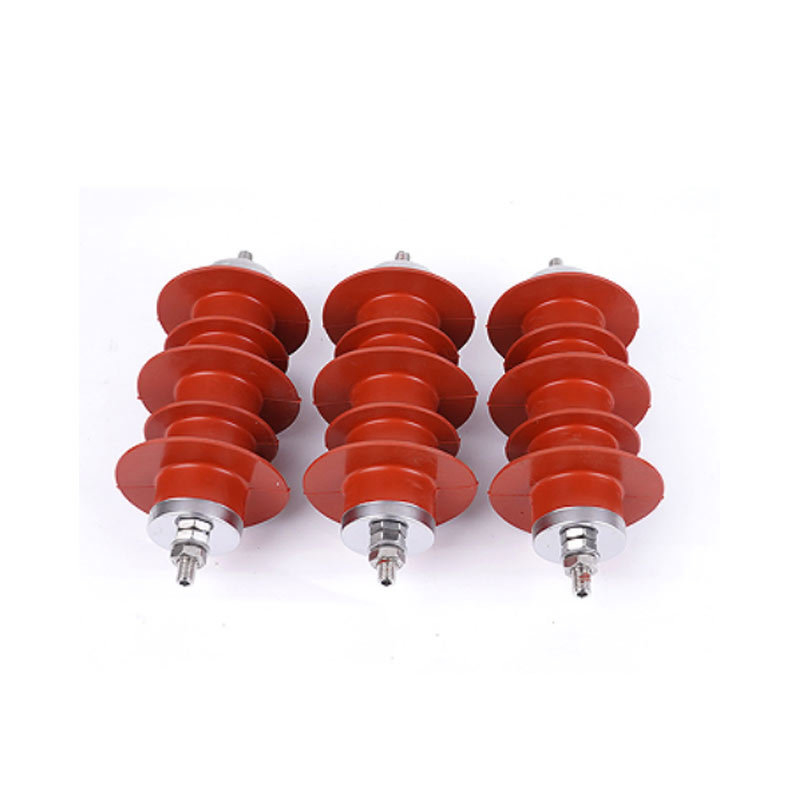
Jikai lists YH5WS-17/50 and YH10WS-17/45 composite-housed gapless zinc oxide arresters for 10 kV systems. The product page states 17 kV rated voltage and 13.6 kV continuous operating voltage for both, with different residual-voltage figures. This shows why system voltage, rated voltage and continuous operating voltage should occupy separate fields in a procurement schedule.
Those published values establish catalog options; they do not prove suitability for every 10 kV network. Request confirmation against the actual grounding method, fault duration, insulation coordination study and site conditions before selecting the model.
Include the installation scope in the RFQ
- Identify the protected asset and proposed arrester location.
- Provide system voltage, frequency and earthing information.
- State environmental exposure, altitude and mounting constraints.
- Request the connection drawing and included mounting accessories.
- Clarify whether the quoted model includes a disconnector and how its status is inspected.
- Ask for test documentation tied to the supplied design.
Have the project engineer review the complete connection and grounding arrangement. A product quotation should not become an improvised field installation procedure.
Frequently asked questions
Is a surge arrester an overload protection device?
No. Its purpose is overvoltage protection. Fuses, circuit breakers and other protection devices perform different duties and must be coordinated separately.
Can MCOV be selected from nominal voltage alone?
That is insufficient. Earthing conditions, highest operating voltage and temporary overvoltage duty affect the choice.
Does a composite housing identify the complete electrical rating?
No. Housing material describes one part of the construction. The electrical characteristics and test documentation remain essential.
Discuss your project with Jikai
Review the related Jikai product specifications, then send your project requirements for a configuration-specific quotation. Include the destination country, quantity, electrical duty and relevant drawings.