Baoding Jikai Power Equipment Co., Ltd.


Composite Insulator Selection for Polluted Environments
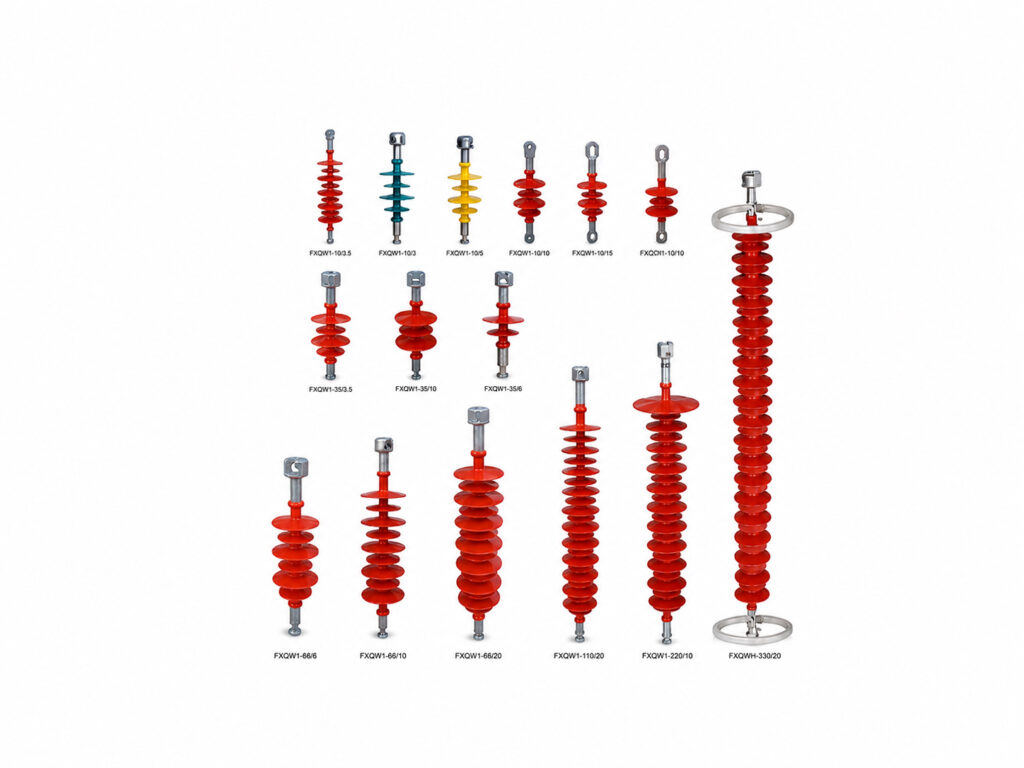
Composite insulator selection should connect the line’s electrical and mechanical requirements with the environment where the equipment will operate. A voltage label alone cannot describe salt exposure, industrial deposits, wetting conditions or the loads carried by the string. Capturing these conditions early helps prevent an incomplete request for quotation.
Start with the pollution assessment
IEC TS 60815-1:2025 provides general principles for selecting outdoor high-voltage insulation with respect to pollution. It links site pollution severity with the selection of candidate insulators and relevant dimensional adjustments. Polymer insulators for AC systems are addressed in Part 3 of the series; DC applications need their own assessment.
A useful site description includes coastal exposure, nearby industrial activity, dust, seasonal rain and existing line performance. Photographs and operating records can help the supplier understand the location, but they should accompany the utility’s specification rather than replace it.
Creepage distance is not arcing distance
Creepage follows the insulating surface. Arcing distance describes a different electrical path through air. Structural height describes the assembly’s physical dimensions. Put all three in the comparison sheet, because a longer overall unit does not automatically establish an appropriate surface leakage path or equivalent installation geometry.
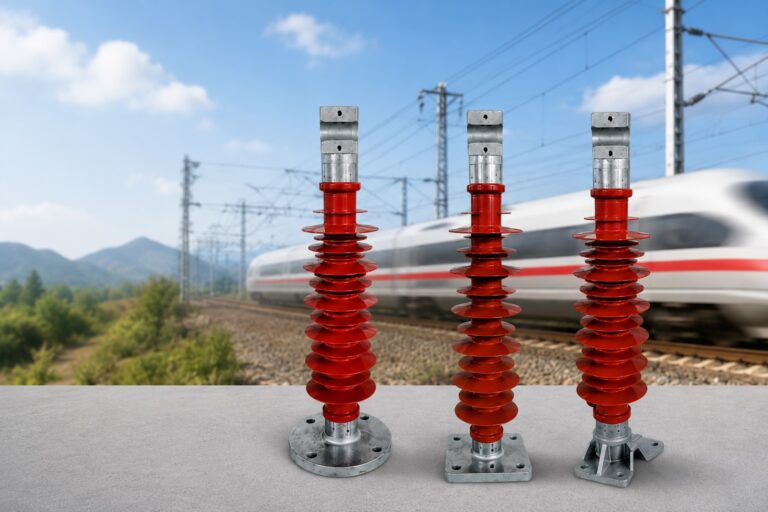
Jikai’s AC suspension composite insulator table illustrates this distinction. It lists FXBW-35/70-1 and FXBW-35/70-2 with the same 35 kV rating and 70 kN specified mechanical load, but different minimum creepage distances of 810 mm and 1015 mm. These are catalog examples, not a recommendation that either model suits a particular pollution class.
Review the complete housing design
Silicone compounds are used for their weather resistance and water-repelling surface properties. Hubbell’s materials explanation also emphasizes that formulation matters: the base material name does not define every performance characteristic. Procurement should therefore cover the complete housing and sealing design, supporting test evidence and service conditions.
Ask how the supplied assembly is identified, how end fittings are protected and what inspection guidance accompanies delivery. Require product-specific documentation instead of accepting an unrelated test report for another insulator family.
Match the mechanical and installation interfaces
Confirm the design loads and the required mechanical rating with the line engineer. Identify the end fitting geometry, connection dimensions, installation length and associated hardware. Replacement projects should include the existing arrangement, since a nominally similar insulator can create a different fit at the tower or conductor attachment.
The purchase schedule should also state quantities by model, any grading hardware required by the approved design, packing requirements and drawing approval responsibilities. This reduces the chance of receiving technically different assemblies under one broad product description.
Frequently asked questions
Are composite insulators suitable for coastal lines?
They can be candidates, but suitability depends on the full design and site assessment. Specify pollution conditions and request the appropriate creepage and test evidence.
Can an AC insulator be substituted into a DC project?
Do not assume equivalence from voltage or appearance. The supplier and project engineer need to verify suitability for the actual system.
Does hydrophobic material remove maintenance requirements?
No universal maintenance exemption follows from the material name. Inspection planning should reflect service experience, condition and the manufacturer’s instructions.
Discuss your project with Jikai
Review the related Jikai product specifications, then send your project requirements for a configuration-specific quotation. Include the destination country, quantity, electrical duty and relevant drawings.