Baoding Jikai Power Equipment Co., Ltd.

Drop-Out Fuse Selection for Distribution Transformers
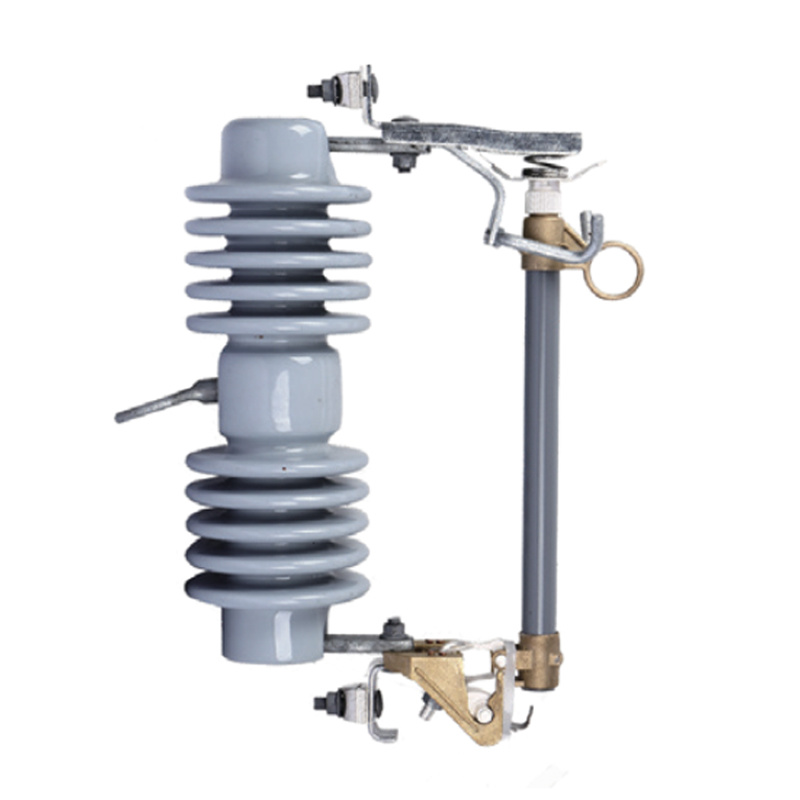
Drop-out fuse selection involves two related decisions: choosing the cutout assembly and choosing the fuse link. The assembly’s current rating does not, by itself, identify the correct link for a transformer. A sound specification separates the hardware rating from the protection characteristics and includes a coordination review.
Define the cutout’s electrical duty
Start with system voltage, maximum operating voltage, insulation requirements and prospective fault current at the installation point. The breaking capability must suit the fault duty. Include frequency and the installation environment, together with the utility’s requirements for mounting, terminals and associated hardware.
Jikai’s outdoor high-voltage drop-out fuse page lists 12 kV rated models with a stated 15 kV maximum working voltage and 100 A or 200 A assembly ratings. Although the page describes a broader application family, buyers should use the exact model’s approved ratings rather than assuming that every listed assembly can serve every voltage in that family.
Choose the link through a coordination study
Fuse-link selection needs transformer loading and inrush information, transformer withstand characteristics, available fault current and the characteristics of adjacent protection. Eaton’s expulsion-fuse guidance describes using transformer heating curves and fuse time-current curves to evaluate protection and coordination. It also explains that primary fuses do not cover every secondary overload or high-impedance fault condition.
Ask the supplier to identify the proposed link type, rating and supporting curves. The design review should distinguish minimum melting from total clearing characteristics, and evaluate the actual protection arrangement rather than applying one multiplier to transformer current.
A current calculation is only the starting point
For illustration, a three-phase 400 kVA transformer with an 11 kV primary has a nominal primary current of approximately 400 ÷ (√3 × 11), or 21 A. This arithmetic does not establish a 21 A fuse-link choice. Inrush, loading conditions, protection curves and fault interruption still need to be evaluated.
Include the transformer connection group and secondary protection details in the study inputs. Retain the approved study with the purchase documentation so replacement links can be checked against the intended coordination scheme.
Clarify the operating function
A visible open position and a load-switching capability are different attributes. Do not assume that an ordinary drop-out fuse may interrupt normal load merely because it can be opened. Specify the required operating duty and use only the approved equipment and operating procedure for that duty.
What belongs in the purchase schedule?
- Cutout model, voltage and current ratings.
- Breaking capability and specified fault conditions.
- Fuse-link type, rating and coordination reference.
- Terminal and mounting details.
- Required accessories, labels and spare links.
- Acceptance documents and manufacturer instructions.
Frequently asked questions
Does a 100 A cutout require a 100 A link?
No. The assembly rating and selected link serve different purposes. Confirm compatibility and choose the link according to the protection study.
Can a primary fuse replace all secondary protection?
No. The protection scheme must address the fault and overload conditions on both sides of the transformer.
What should a buyer send with an inquiry?
Provide transformer kVA, voltage ratio, connection group, fault level, installation details and the applicable utility specification.
Discuss your project with Jikai
Review the related Jikai product specifications, then send your project requirements for a configuration-specific quotation. Include the destination country, quantity, electrical duty and relevant drawings.