Baoding Jikai Power Equipment Co., Ltd.


JP Distribution Cabinet Selection for 0.4 kV Projects
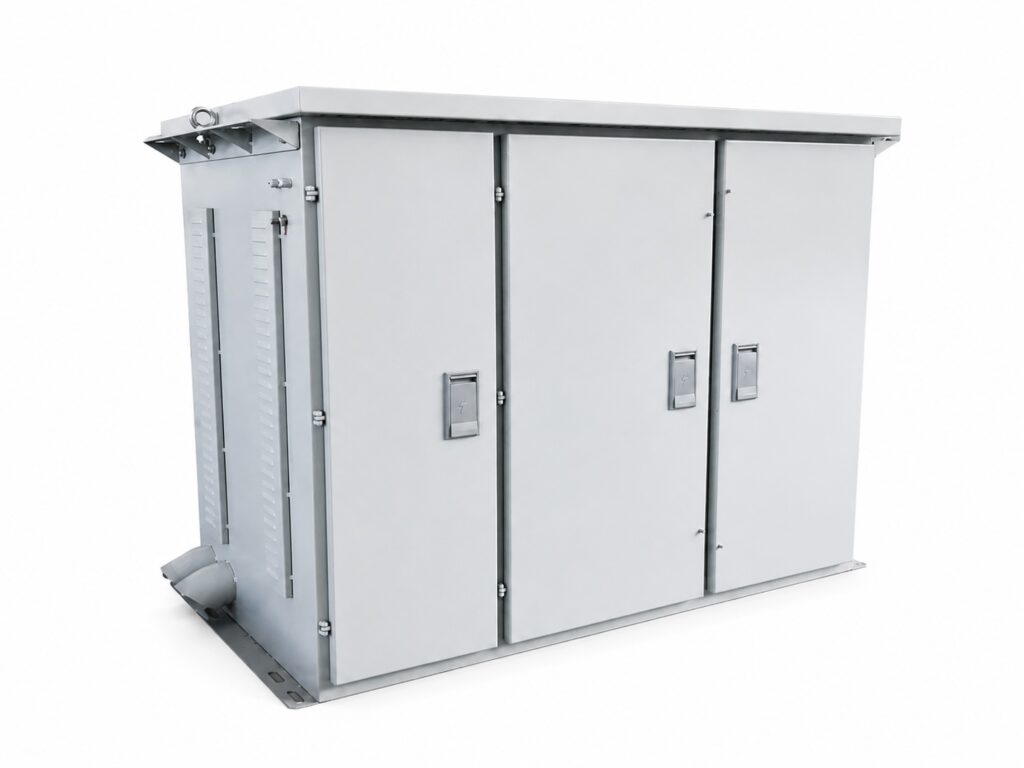
A JP distribution cabinet should be selected as a complete low-voltage assembly for the project’s circuits and installation conditions. Rated current is important, but it does not describe outgoing feeders, protection settings, cable access or the cabinet’s environmental duty. A useful buying process combines those requirements in one equipment schedule.
Start with the load and feeder schedule
List every outgoing circuit, its expected load and the required switching or protection function. Identify future spare ways separately from circuits needed at commissioning. Give the supplier the upstream supply arrangement and available fault information so the proposed cabinet can be checked as part of the distribution system.
Jikai’s JP cabinet page lists 0.4 kV, 50 Hz equipment with 800 A and 1250 A options and stainless-steel construction. These published choices help frame an inquiry. They should not be interpreted as evidence that either option fits every installation carrying the same nominal current.
Make environmental requirements explicit
Jikai lists IP44, IP45 and IP54 options depending on configuration. Request confirmation of the specific enclosure rating included in the offer, including cable entries and installed accessories. The specification should describe rain exposure, dust, temperature, condensation risk and any corrosive conditions at the site.
Do not use “outdoor” as the entire environmental specification. A sheltered residential location and an exposed industrial site can impose different requirements. Likewise, stainless steel should be identified by the agreed material and finish where the application requires it; the broad material label alone does not settle the corrosion assessment.
Define what the cabinet contains
| Item | Procurement question |
|---|---|
| Incoming device | Which function and rating are included? |
| Outgoing circuits | How many feeders, with what protective devices? |
| Metering | Which measurements, instruments and interfaces are required? |
| Auxiliaries | Which control supplies and accessories are included? |
| Expansion | Which spare ways and physical provisions are reserved? |
Do not assume reactive power compensation, remote monitoring or a particular meter is included simply because a cabinet is called “integrated.” If needed, state those functions individually and request an itemized bill of materials.
Review interfaces and evidence
Provide cable sizes, entry directions, foundation constraints and access limits. Ask for the general arrangement and circuit drawings before releasing the design. Check door clearance and the practical space needed for cable termination and later replacement of components.
Request the applicable assembly ratings and supporting verification documents for the offered configuration. Where published electrical values are unclear, resolve them through an approved data sheet instead of copying them into a tender. The final purchase record should connect the drawing, component list and accepted ratings to one identifiable configuration.
Frequently asked questions
Is the highest current option always preferable?
No. Select equipment for the required duty and approved design, including thermal conditions, fault requirements, space and cost.
Does a higher IP designation replace ventilation review?
No. Environmental protection and temperature rise are separate parts of the equipment assessment.
What information makes a quotation more accurate?
Send the feeder schedule, supply details, installation location, environmental conditions and required component scope with your inquiry.
Discuss your project with Jikai
Review the related Jikai product specifications, then send your project requirements for a configuration-specific quotation. Include the destination country, quantity, electrical duty and relevant drawings.